
Cherry Laurel Hedging: The Complete UK Growing Guide
Cherry laurel (Prunus laurocerasus) is one of the UK’s most popular choices for creating fast, evergreen, and reliable privacy hedges. Hardy, attractive, and easy to maintain, cherry laurel is a favourite among homeowners, landscapers, and developers seeking dense, year-round foliage and quick results.
This complete guide covers everything you need to know — from growth speed and spacing, to pruning, toxicity, planting techniques, and common issues — with clear answers backed by real horticultural best practices.
Whether you’re planting a small garden boundary or a large property screen, this is your definitive UK guide to cherry laurel hedging.

What Is Cherry Laurel? A Quick Overview
Cherry laurel (also called Common Laurel or Prunus Rotundifolia) is an evergreen shrub native to the Balkans and widely grown across the UK. It is adaptable, tolerant, and capable of rapid yearly growth, making it ideal for hedging.
Key features
- Evergreen: Keeps leaves all year
- Fast growing: 30–60cm per year (see growth section)
- Hardy: Performs well in cold UK winters
- Shade tolerant: Grows in full shade or full sun
- Versatile: Can be pruned tightly or left natural
- Attractive: Glossy, rich green leaves
Cherry laurel works well in both formal and informal landscapes, making it one of the most flexible hedge species available.
Benefits of Cherry Laurel Hedging
1. Exceptional Privacy
Cherry laurel creates a dense, leafy screen that provides instant privacy, blocks unwanted views, and reduces noise.
2. Fast Growth
One of the quickest-growing evergreen hedges.
3. Year-Round Greenery
Keeps its foliage through every season, including winter.
4. Shade Tolerance
Unlike many hedges, cherry laurel thrives in deep shade — ideal for north-facing gardens.
5. Pollution Resistant
Suitable for urban areas and roadside planting.
6. Wildlife Benefits
Provides shelter, nesting sites, and protective cover for birds.
7. Cost-Effective
Large plants are available at reasonable prices, and their rapid growth reduces waiting time.

How Fast Does Cherry Laurel Grow?
Cherry laurel is known for its impressive speed.
- Average growth: 30–60cm per year
- Ideal conditions: Moist soil, partial shade, regular trimming
- Maximum speed: Up to 90cm in perfect conditions
Young hedges grow faster as roots establish, slowing slightly as they mature.
Full detailed article: How Fast Does Cherry Laurel Grow?
Cherry Laurel Varieties Explained
Cherry laurel comes in several cultivars:
1. Prunus laurocerasus ‘Rotundifolia’
The most popular UK variety. Large leaves, fast growth, versatile.
2. Prunus ‘Caucasica’
Narrower leaves, darker green tones, very elegant.
3. Prunus ‘Etna’
Compact, smaller leaves, bronze new growth.
4. Portuguese Laurel (not a cherry laurel, but a close alternative)
Slower growing, refined appearance — perfect for premium gardens.

Impact Hedging
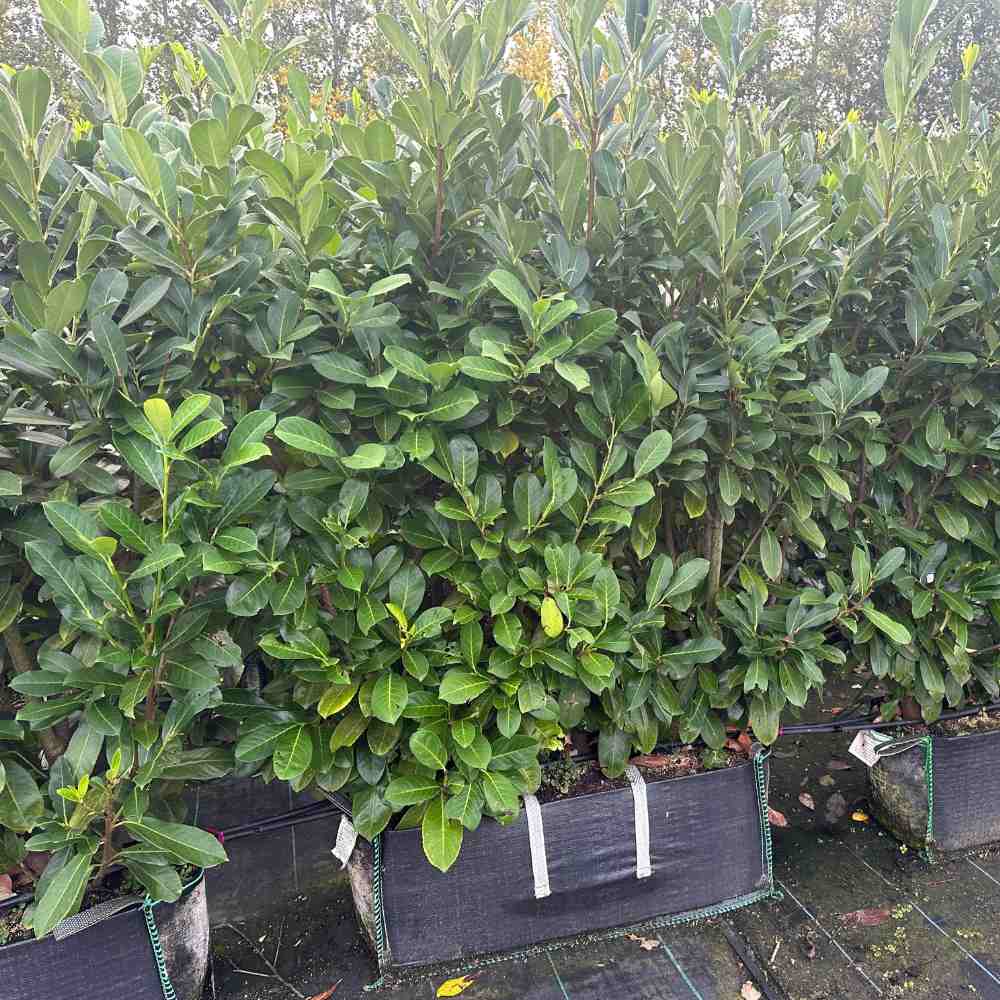
Cherry Laurel Instant Hedge 150cm (5ft), 1m Hedgebag – Evergreen


When to Plant Cherry Laurel
Cherry laurel can be planted any time of year, depending on the plant type:
-

BEST TIME FOR POT-GROWN PLANTS
All year round,
as long as the soil isn’t frozen. -

BEST TIME FOR ROOT-BALL LAUREL
October to April
(dormant season). -

AVOID
Frozen soil
Waterlogged clay
Extreme heatwaves


How to Plant Cherry Laurel (Step-by-Step)
1. Prepare the ground
- Clear weeds
- Loosen soil to 30–40cm
- Add compost or manure for clay or sandy soils
2. Dig the holes
- Twice as wide as the root ball
- Same depth as the pot or hessian wrap
3. Planting
- Place plant in the hole
- Backfill with loose soil
- Firm gently
- Water deeply
4. Aftercare
- Water weekly for the first 8–12 weeks
- Mulch around the base
Avoid over-fertilising in the first year

Cherry Laurel Spacing Guide
Spacing depends on the size of the plants:
Plant Height 30–60cm
- Spacing Per Metre: 3–4 per metre
- Notes: For patient growers
Plant Height 60–100cm
- Spacing Per Metre: 2–3 per metre
- Notes: Most common spacing
Plant Height 100–150cm
- Spacing Per Metre: 2 per metre
- Notes: Faster results
Instant hedging
- Spacing Per Metre: 1 per metre
- Notes: Instant coverage
For full optimisation and no guesswork →Read: How Many Cherry Laurel Plants Per Metre?
When to Prune Cherry Laurel
Cherry laurel is forgiving but responds best to pruning at specific times.
-

BEST TIME TO PRUNE
Late spring (May–June)
Early autumn (September) -
AVOID
Frost
Heatwaves
Mid-winter

Is Cherry Laurel Poisonous? (Safety Guide)
Certain parts of cherry laurel contain compounds that can be toxic if eaten in large quantities.
Toxic parts:
- Leaves
- Stems
- Berries (if crushed/chewed)
Safe for gardens?
- Yes
- Widely used in public parks
- Safe when not ingested deliberately
Pets and children
Dogs and children rarely eat the leaves due to their bitter flavour.
- Full breakdown → Is Cherry Laurel Poisonous?
- More detail on berries → Can You Eat Cherry Laurel Berries?
Common Cherry Laurel Problems (and Fixes)
1. Yellowing Leaves
Cause: Waterlogging, drought, nutrient deficiency
Fix: Improve drainage, water deeply but infrequently, mulch
2. Shot Hole Disease
Cause: Bacterial/fungal
Fix: Remove affected leaves, improve air flow
3. Winter Leaf Scorch
Cause: Frost + cold winds
Fix: Mulch base, water well pre-winter
4. Poor Growth
Cause: Planting too deep, dry soil
Fix: Lift plant slightly, improve watering
Cherry Laurel vs Portuguese Laurel
Both create excellent evergreen hedges.
-

Cherry Laurel
Fast-growing
Large leaves
Budget-friendly -

Portuguese Laurel
Slow-growing
Smaller, elegant leaves
Premium look


Best Alternatives to Cherry Laurel
If cherry laurel isn’t suitable for your space, soil conditions or preferred garden style, there are several excellent alternatives to consider. If you're unsure which option best fits your needs, our guide on how to choose the right hedge for your garden walks through key factors such as growth rate, maintenance level and privacy requirements.
Popular alternatives include:
- Portuguese Laurel
- Photinia Red Robin
- Privet
- Griselinia
- Hornbeam
Each offers different characteristics in terms of leaf size, colour, growth speed and seasonal appearance, allowing you to match your hedge choice to both practical needs and overall garden design.
Buy Cherry Laurel Hedging (UK Delivery)
Explore our full range of Cherry Laurel Hedging for fast delivery across the UK.