
-
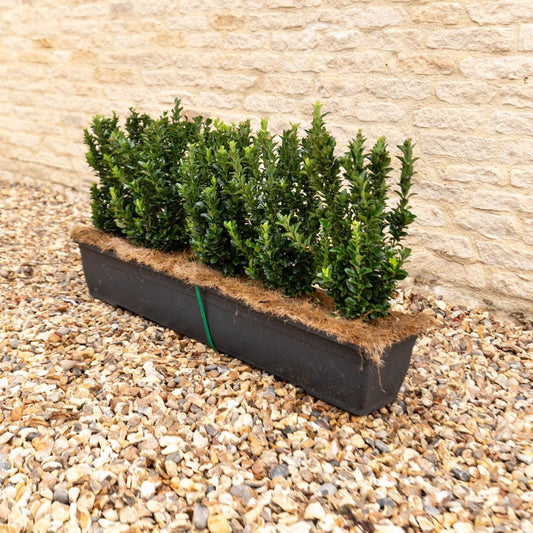
Euonymus Jean Hugues Instant Hedge 35-40cm, 1m Trough – Evergreen
Vendor:Impact HedgingRegular price £95.00 GBP inc. VAT£79.17 GBP exc. VATRegular price£110.00 GBP£91.67 GBPSale price £95.00 GBP inc. VAT£79.17 GBP exc. VATON SALE -
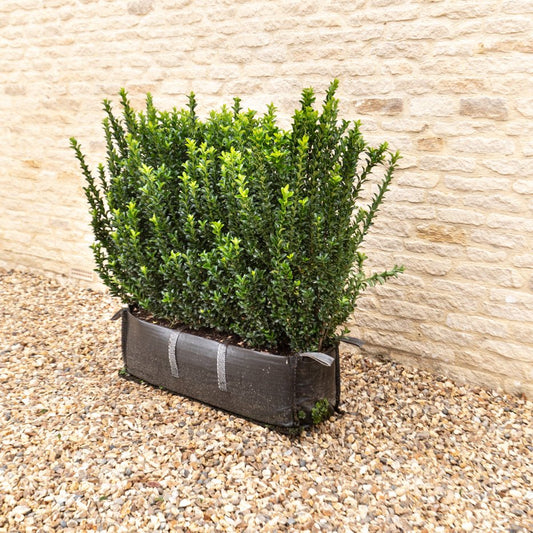
Euonymus Jean Hugues Instant Hedge 70-80cm (2.5ft), 1m Hedgebag – Evergreen
Vendor:Impact HedgingRegular price £179.00 GBP inc. VAT£149.17 GBP exc. VATRegular price£199.00 GBP£165.83 GBPSale price £179.00 GBP inc. VAT£149.17 GBP exc. VATON SALE


Why Choose English Yew Hedging for Your Garden?
English Yew (Taxus baccata) is a traditional British evergreen valued for its fine foliage, dense branching and exceptional longevity.
Used for centuries in formal gardens, historic estates and landscaped grounds, Yew hedges create attractive boundaries that can be maintained with precision.
Unlike faster growing evergreen species, Yew develops at a more moderate pace, making it particularly suitable for formal designs where a consistent shape is important.
English Yew hedges offer several practical benefits:
- Evergreen privacy: Dense, dark green foliage provides attractive garden screening throughout the year.
- Excellent for formal hedging: Responds well to trimming and can be shaped into neat, architectural boundaries.
- Long lasting structure: English Yew is an exceptionally long lived species when grown in suitable conditions.
- Shade tolerance: Suitable for full sun, partial shade and many shaded garden locations.
- Manageable growth: Generally requires less frequent trimming than vigorous hedges such as Cherry Laurel.
- Versatile appearance: Complements traditional gardens, contemporary landscaping and decorative topiary.
For homeowners looking for an elegant evergreen hedge that can remain a feature of their garden for many years, English Yew is an excellent choice.
Choosing the Right English Yew Hedge
At Impact Hedging, our established English Yew hedges are supplied in convenient 1m sections, making it straightforward to create a continuous garden boundary.
We offer two main formats to suit different planting requirements.
English Yew Instant Hedge 40 to 50cm, 1m Trough
Our English Yew Instant Hedge 40 to 50cm is an established trough grown hedge, ideal for creating neat, low evergreen boundaries.
This smaller format is particularly suitable for:
- Front garden borders
- Pathways and entrances
- Decorative garden divisions
- Formal planting schemes
- Low evergreen hedges
- Gardens where the hedge can gradually develop to the desired height
Each 1m trough provides an established section of Yew hedging, creating immediate structure compared with planting individual young plants.
English Yew Instant Hedge 140cm, 1m Hedgebag
For customers who require more established height, our English Yew Instant Hedge 140cm (4.5ft) provides a taller evergreen boundary.
Grown in Oxfordshire and supplied in a convenient 1m hedgebag, this established hedge is suitable for:
- Screening overlooked gardens
- Creating boundaries between properties
- Dividing larger gardens into separate areas
- Formal garden layouts
- Establishing evergreen structure around landscaped spaces
The established height provides a more immediate screening effect, although the overall level of privacy depends on the hedge's density and surrounding conditions.
Browse the products above to compare available heights, prices and planting formats.
For other established evergreen options, explore our Evergreen Hedges.
How Fast Do Yew Hedges Grow?
English Yew is generally considered a slow to moderately growing hedge.
Under suitable conditions, established Yew can produce approximately 10 to 30cm of growth annually, although actual growth varies depending on soil, sunlight, moisture and plant maturity.
While this is slower than vigorous hedging species such as Cherry Laurel or Privet, it offers advantages for gardens where a tidy, controlled boundary is preferred.
Yew responds well to pruning and can maintain a compact, dense structure over time.
Its relatively measured growth rate makes it particularly attractive for formal gardens and landscapes where precise shapes need to be maintained.
If rapid height development is your main priority, our Fast Growing Hedging Plants may offer more suitable alternatives.
Where Do English Yew Hedges Grow Best?
English Yew is adaptable to different garden positions, although suitable soil drainage is particularly important for healthy establishment.
Sunlight and Shade
Yew grows well in full sun or partial shade and is one of the more shade tolerant evergreen hedging species.
It can therefore be suitable for north facing boundaries, areas near buildings and gardens where direct sunlight is limited.
Growth may be slower in deeply shaded positions, but Yew can still form an attractive hedge when other growing conditions are suitable.
Soil Conditions
English Yew performs best in reasonably fertile, well drained soil.
It can grow in a variety of soil types, including chalky, loamy and sandy soils, provided adequate moisture and drainage are available.
Persistently waterlogged ground should be avoided, as saturated soil can damage the roots and lead to poor plant health.
Exposed Locations
Established Yew is hardy and can tolerate many UK garden conditions.
However, particularly exposed sites with strong, drying winds may cause foliage stress, especially during establishment.
Newly planted hedges benefit from appropriate watering and, where necessary, protection from severe weather.
English Yew vs Cherry Laurel: Which Is Better?
Both English Yew and Cherry Laurel are popular evergreen hedges, but they have different growth characteristics and visual styles.
English Yew
Yew has fine, needle like foliage and naturally dense branching.
It is particularly suitable for formal boundaries, topiary and gardens where an elegant, architectural appearance is desired.
Its slower growth makes it easier to maintain precise shapes without frequent heavy trimming.
Cherry Laurel
Cherry Laurel has large, glossy leaves and generally grows more quickly.
It is often chosen for larger privacy screens and boundaries where vigorous growth and broad evergreen foliage are desirable.
Because of its faster growth, Cherry Laurel may require more frequent maintenance to control height and width.
Choose English Yew if you want a refined, long lasting evergreen hedge that responds exceptionally well to formal shaping.
Choose Cherry Laurel if you prefer larger foliage and relatively rapid growth for substantial garden screening.
Explore our Cherry Laurel Hedges to compare the available options.
How to Plant English Yew Instant Hedging
Our established Yew hedges are supplied in troughs and hedgebags, providing a convenient alternative to planting individual young shrubs.
For successful planting:
- Prepare the planting area. Remove weeds, grass and debris from the intended boundary.
- Check the drainage. Ensure the planting area does not remain waterlogged after rainfall.
- Dig a suitable trench. Allow enough room for the root system without crowding or bending the roots.
- Position the hedge sections. Place each unit at the appropriate planting depth, keeping the root system aligned with the surrounding soil level.
- Backfill carefully. Fill around the roots and firm gently to remove large air pockets.
- Water thoroughly. Water immediately after planting and continue regularly during establishment.
Spring and autumn are particularly favourable planting periods because milder temperatures and natural rainfall help support root development.
Established instant hedging can also be planted at other suitable times of year, provided the ground is not frozen or waterlogged and adequate watering is available.
How to Care for English Yew Hedges
Once established, English Yew is relatively straightforward to maintain when planted in suitable conditions.
Watering
Newly planted Yew hedges need regular watering during their first growing season.
Check soil moisture during warm, dry or windy weather and water thoroughly when needed.
Established Yew can tolerate some dry conditions, although prolonged drought may affect plant health and growth.
Avoid excessive watering where soil drainage is poor.
Pruning and Shaping
English Yew responds particularly well to trimming and can be maintained as a formal hedge with straight edges and a uniform appearance.
One main trim in late summer is often sufficient for an established hedge.
Additional light trimming may be useful where a particularly precise shape is required.
Yew can also regenerate from older wood when pruned appropriately, making it suitable for renovation of established hedges.
Always check for active bird nests before carrying out maintenance.
Feeding and Soil Care
Yew does not usually require frequent feeding when grown in reasonably fertile soil.
A suitable organic mulch can help conserve soil moisture and reduce weed competition.
Keep mulch away from the main stems and avoid allowing the planting area to remain excessively wet.
Are English Yew Hedges Poisonous?
English Yew is a highly poisonous plant, and this should be considered when selecting hedging for a garden.
The foliage, bark and seeds contain toxic compounds that can cause serious poisoning if eaten.
The red fleshy covering around the seed is an exception, but the seed itself is poisonous and should never be consumed.
Yew can pose a particular risk to grazing animals, including horses and livestock.
For gardens regularly used by animals that may browse hedging plants, an alternative species may be more appropriate.
You can explore our Animal Friendly Hedging Plants for other options, although individual plant suitability should always be checked.
Why Buy Yew Hedges from Impact Hedging?
At Impact Hedging, we specialise in established, UK grown instant hedging designed to help homeowners and landscapers create attractive garden boundaries with less waiting time.
Our English Yew hedges are grown in Oxfordshire and supplied in convenient 1m trough and hedgebag sections.
When you order from Impact Hedging, you benefit from:
- Established English Yew hedging ready for planting
- A choice of low and taller evergreen hedge sections
- Convenient 1m sections for straightforward planning
- Dense foliage suitable for formal boundaries
- Free mainland UK delivery on qualifying orders over £350
- A 12 month plant guarantee, subject to its terms
- Advice and support when choosing your hedging
Browse the English Yew hedges above or explore our complete range of Instant Hedges to find the right option for your garden.
Frequently asked questions
Are Euonymus hedges evergreen?
Is Euonymus a good alternative to Box hedging?
How quickly do Euonymus hedges grow?
How tall does Euonymus 'Jean Hugues' grow?
Can Euonymus hedges grow in shade?
How many Euonymus instant hedge sections do I need?